
Shanghai Industrial Transformer Co., Ltd. has been involved in electrical system engineering discussions where the 1600kVA wind power transformer voltage ratio plays a key role in grid integration and stable energy conversion from turbines.
In wind energy systems, transformers are not just passive equipment; they are the link between variable generator output and stable grid requirements. One of the most important technical parameters in this process is the voltage ratio, especially in medium-to-large capacity units such as wind power transformer voltage ratio system. Understanding how this ratio works helps explain how wind-generated electricity becomes compatible with transmission networks.
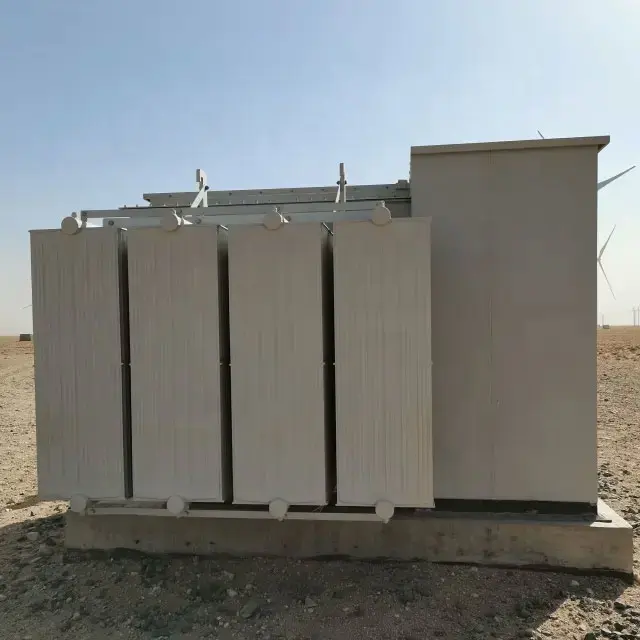
The voltage ratio in a transformer refers to the relationship between the primary voltage (input side) and the secondary voltage (output side). In simple terms, it defines how much the voltage is increased or decreased.
For a 1600kVA wind power transformer, this ratio is determined by the number of turns in the primary and secondary windings. The fundamental principle is:
- More turns on the secondary side → higher output voltage
- Fewer turns on the secondary side → lower output voltage
This relationship is expressed through the transformer turns ratio:
Voltage Ratio = Primary Voltage / Secondary Voltage = Primary Turns / Secondary Turns
In wind power applications, this becomes especially important because turbine output is variable and must be stepped up or adjusted before feeding into the grid.
Wind turbines typically generate electricity at medium or low voltage levels. However, power grids operate at much higher transmission voltages for efficiency over long distances.
A 1600kVA wind power transformer voltage ratio ensures that this conversion happens smoothly, without excessive energy loss or instability.
Key reasons voltage conversion is necessary:
- Wind turbine output fluctuates due to wind speed changes
- Grid systems require stable voltage levels
- Long-distance transmission demands high voltage to reduce losses
- Electrical protection systems rely on standardized voltage ranges
Without proper voltage transformation, wind energy integration into the grid would be inefficient and unstable.
While exact configurations vary depending on project requirements and grid standards, a common setup for a 1600kVA wind transformer may involve stepping voltage from medium voltage levels to distribution or transmission levels.
| Side of Transformer | Typical Voltage Level | Function |
| Primary Side | 0.69kV – 1.14kV | Wind turbine output collection |
| Secondary Side | 10kV – 35kV | Grid integration or substation transfer |
This step-up process is what allows a 1600kVA wind power transformer voltage ratio to efficiently bridge generation and transmission systems.
Inside the transformer, voltage transformation is not electronic—it is electromagnetic.
When alternating current flows through the primary winding, it creates a magnetic field in the iron core. This magnetic field induces voltage in the secondary winding. The difference in coil turns determines the final voltage level.
A simplified relationship is:
- If secondary windings are 10 times greater than primary → voltage increases approximately 10 times
- If secondary windings are fewer → voltage decreases proportionally
This physical structure is why transformer design precision is critical in wind energy systems.
Unlike stable industrial power sources, wind energy systems introduce unique operational conditions:
- Rapid fluctuations in input power
- Frequent partial-load operation
- Exposure to outdoor environmental stress
- Grid synchronization requirements
A 1600kVA wind power transformer voltage ratio must remain stable under these conditions. Even small deviations in voltage ratio behavior can affect grid synchronization or cause energy loss.
To handle this, transformer design often incorporates:
- Reinforced insulation systems
- Improved thermal stability
- Precision winding control
- Enhanced electromagnetic shielding
Voltage ratio is not just about conversion—it directly affects efficiency.
If the ratio is not properly matched to system requirements, several issues can occur:
- Increased copper losses in windings
- Higher heat generation
- Voltage instability at grid interface
- Reduced overall energy transfer efficiency
In wind energy systems, even small efficiency losses can become significant over time due to continuous operation. Therefore, accurate control of the 1600kVA wind power transformer voltage ratio is essential for long-term performance stability.
There are several misconceptions often associated with transformer voltage behavior:
1. Voltage ratio changes automatically with load
In reality, the voltage ratio is fixed by design. It does not change with load, although output voltage may slightly fluctuate due to internal impedance.
2. Higher voltage ratio always means better performance
Not necessarily. The ratio must match system requirements. Incorrect ratio selection can lead to grid incompatibility.
3. Voltage ratio affects only voltage, not current
In fact, voltage and current are inversely related in transformer operation. Changing voltage level also changes current proportionally.
Modern wind power transformers rely heavily on precise engineering to maintain voltage ratio stability over long operational lifetimes.
Design factors include:
- Winding geometry accuracy
- Core material magnetic properties
- Insulation consistency
- Thermal expansion control
In manufacturing environments such as those developed by Shanghai Industrial Transformer Co., Ltd., these design elements are carefully aligned to ensure that the transformer performs reliably under wind farm conditions.
In real-world wind farms, voltage ratio stability influences several operational aspects:
- Grid synchronization speed
- Power quality consistency
- Equipment lifespan in substations
- System response during wind fluctuations
A well-matched 1600kVA wind power transformer voltage ratio helps ensure that energy harvested from wind turbines is transmitted smoothly into regional or national grids without unnecessary conversion losses.
The voltage ratio in a 1600kVA wind transformer is not just a theoretical parameter—it is a core operational principle that defines how wind energy is adapted for grid use.
It controls how voltage is stepped up from turbine generation levels to transmission-ready levels, ensuring compatibility, efficiency, and stability in renewable energy systems. Through electromagnetic induction and precisely engineered winding ratios, the transformer maintains consistent performance even under fluctuating wind conditions.
As wind energy continues to expand globally, understanding the behavior of the 1600kVA wind power transformer voltage ratio remains essential for designing stable and efficient power systems, particularly in large-scale renewable integration projects supported by manufacturers such as Shanghai Industrial Transformer Co., Ltd.


