
Shanghai Industrial Transformer Co., Ltd. has been associated with discussions on solar power infrastructure design, where the SGOB Photovoltaic Transformer is often examined in relation to harmonic stress and load behavior in PV systems, especially when K-factor rating becomes a deciding technical parameter.
In modern photovoltaic (PV) installations, transformers are no longer only evaluated by capacity and voltage class. With the increasing use of inverters and non-linear loads, waveform distortion has become a practical engineering concern. This is where the concept of K-factor rating becomes important, especially when selecting a Photovoltaic Transformer for stable long-term operation.
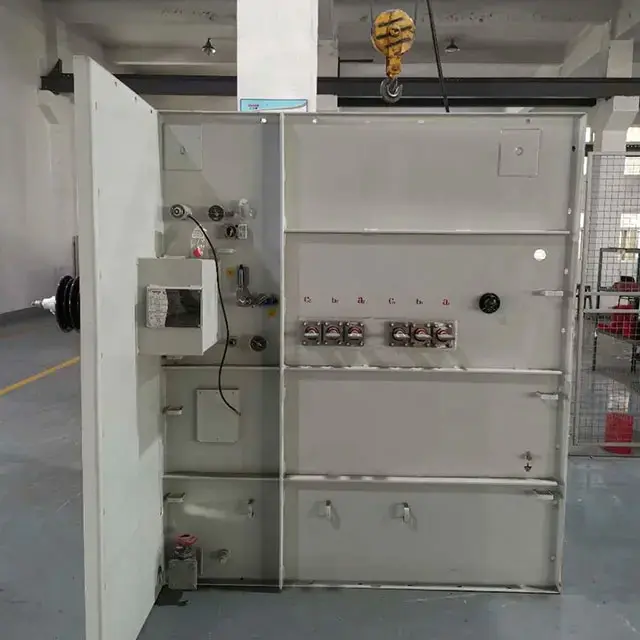
K-factor is a rating used to measure how well a transformer can handle harmonic currents generated by non-linear electrical loads.
In simple terms:
- Pure sinusoidal current = low K-factor requirement
- High harmonic distortion = high K-factor requirement
In photovoltaic systems, solar inverters convert DC power into AC power, but this conversion is not perfectly smooth. It introduces harmonic currents into the system, which can cause additional heating in transformer windings.
A Photovoltaic Transformer with an appropriate K-factor rating is designed to tolerate these harmonic effects without performance degradation.
Unlike traditional power systems, photovoltaic installations constantly deal with inverter-based power generation. These inverters create switching frequencies that distort the ideal sine wave.
This leads to:
- Additional heating in transformer windings
- Increased eddy current losses
- Reduced insulation lifespan
- Potential voltage waveform distortion at grid connection points
If not properly managed, harmonic distortion can reduce system reliability over time.
The K-factor rating does not eliminate harmonics, but it defines how well a transformer can withstand them.
A higher K-factor means the transformer is designed with:
- Improved conductor sizing
- Reduced hot spots in windings
- Enhanced insulation materials
- Better thermal dissipation paths
For a Photovoltaic Transformer, this is particularly important because solar output fluctuates throughout the day, continuously changing harmonic profiles.
| K-Factor Level | Typical Application Condition | Suitability for PV Systems |
| K-1 | Pure linear loads | Not suitable for PV systems |
| K-4 to K-9 | Light harmonic distortion | Limited PV applications |
| K-13 to K-20 | Moderate inverter loads | Common PV installations |
| K-20+ | High harmonic environments | Heavy industrial PV farms |
This table helps explain why modern solar installations rarely use low K-factor transformers.
The root cause lies in how solar inverters operate. Instead of producing a smooth waveform, they use high-speed switching techniques.
This results in:
- 3rd, 5th, and 7th harmonic currents
- High-frequency ripple currents
- Sudden load variations depending on sunlight intensity
A well-designed Photovoltaic Transformer must absorb and manage these irregularities without overheating or losing efficiency.
One of the most important effects of harmonic currents is additional heat generation.
Even if the electrical load remains within rated capacity, harmonics can cause:
- Localized hot spots in windings
- Faster insulation aging
- Reduced long-term efficiency
- Increased cooling demand
K-factor-rated transformers are engineered to distribute these thermal stresses more evenly.
The SGOB incorporates several structural enhancements that support harmonic tolerance:
- Reinforced winding geometry to reduce eddy currents
- Improved conductor materials for thermal stability
- Advanced cooling pathways to manage heat buildup
- Compact insulation structure optimized for PV inverter output
These design choices allow the transformer to maintain stable operation even under fluctuating harmonic conditions.
Photovoltaic systems are typically installed outdoors, where transformers are exposed to:
- High solar radiation
- Temperature fluctuations
- Dust and moisture exposure
- Long continuous operating cycles
A Photovoltaic Transformer must therefore combine electrical performance with environmental durability. K-factor design indirectly contributes to this by reducing internal thermal stress, which is often worsened by external heat conditions.
As solar farms expand in size, grid operators impose stricter requirements on power quality. Harmonic control is now part of grid compliance standards in many regions.
A properly rated transformer helps ensure:
- Stable grid injection
- Reduced harmonic feedback into the system
- Improved compatibility with smart inverters
- Better long-distance transmission efficiency
The SGOB Transformer is designed with modular construction, which helps in managing heat distribution and simplifying system integration.
Compact design contributes to:
- Shorter internal electrical paths
- Reduced impedance imbalance
- Easier cooling airflow management
- Flexible installation in PV stations
These factors indirectly support better harmonic performance when combined with correct K-factor selection.
Ignoring K-factor requirements can lead to long-term operational challenges such as:
- Unexpected overheating under normal load conditions
- Reduced transformer lifespan
- Increased maintenance interruptions
- Unstable voltage quality in PV output systems
For this reason, engineering teams increasingly evaluate K-factor as a core specification rather than an optional feature.
K-factor rating has become an essential parameter in photovoltaic power system design because it directly relates to how transformers respond to harmonic distortion created by inverter-based energy generation. It is not a theoretical measurement but a practical indicator of thermal resilience and operational stability.
In PV applications, selecting a properly rated Photovoltaic Transformer helps ensure that solar energy can be delivered smoothly into the grid despite fluctuating environmental and electrical conditions. Within this context, designs such as the SGOB developed by Shanghai Industrial Transformer Co., Ltd. reflect the growing importance of harmonic-aware engineering in modern renewable energy infrastructure.


