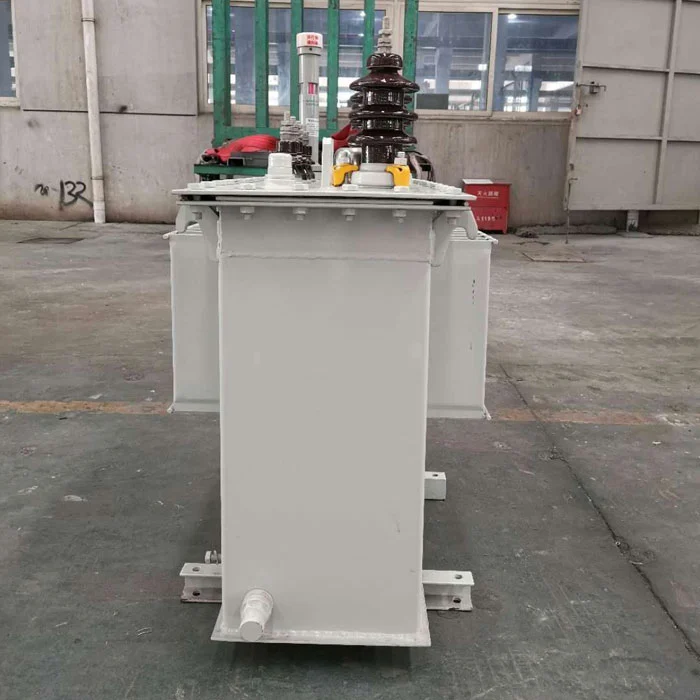
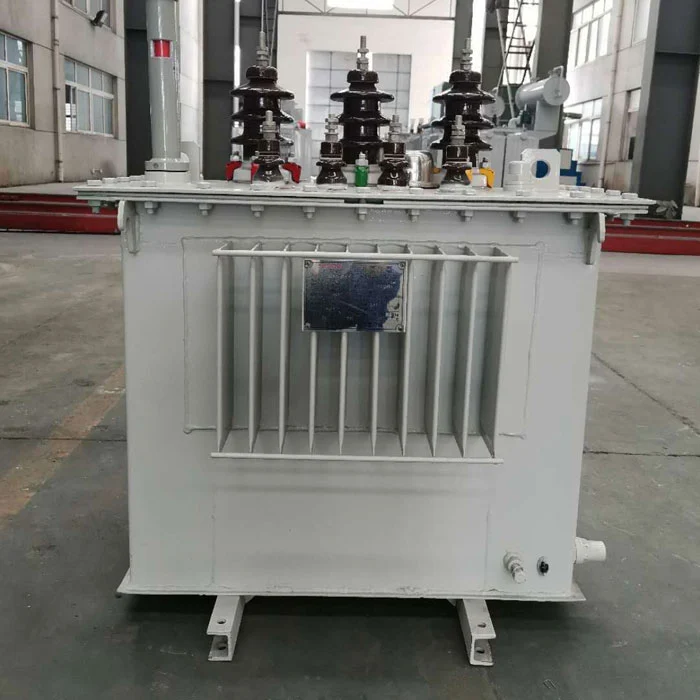
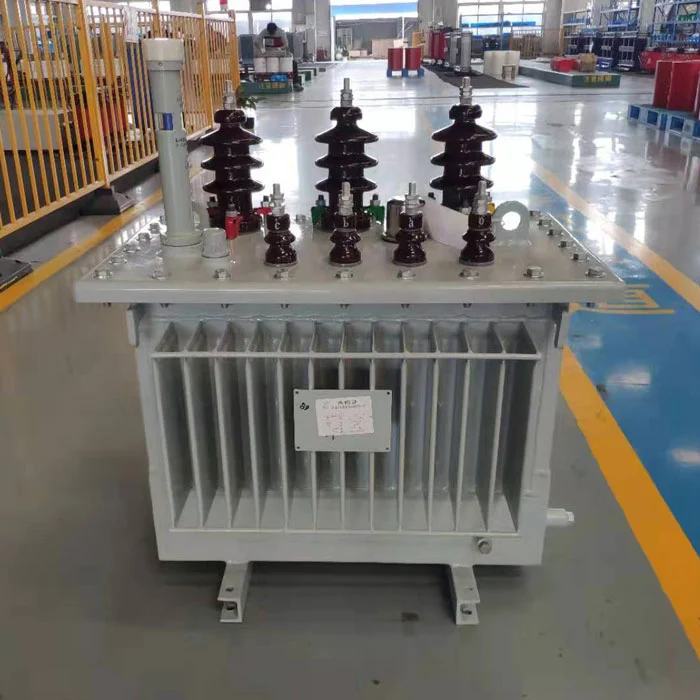
SGOB 100kVA Transformer Spiral Coil With Longitudinal Oil Passage is a China export solution. It delivers superior internal cooling and steady load operation. The spiral coil and longitudinal oil passages reduce hotspots and optimize thermal balance for commercial and industrial distribution networks.
A 100kVA Transformer Spiral Coil With Longitudinal Oil Passage with spiral-wound LV coil and 5mm longitudinal oil ducts reduces that hot spot by 9-12°C. Verified by embedded fiber optic sensors during factory heat run. Manufactured by Shanghai Industrial Transformer Co., Ltd.
Factory test data from 12 standard S11 100kVA units (layer-wound, no internal ducts) produced by Shanghai Industrial Transformer Co., Ltd. between January and December 2024:
Using IEEE C57.91 insulation life curves: at 108°C continuous, expected life is 10-12 years. At 96°C, expected life doubles to 20-24 years. This 12°C difference is the engineering target for the spiral coil design.
This 100kVA Transformer Spiral Coil With Longitudinal Oil Passage replaces the conventional layer-wound LV coil with a spiral-wound design. Two engineering changes work together based on actual production at Shanghai Industrial Transformer Co., Ltd. (established 2007, 40,000m² factory).
Layer winding stacks 20-40 turns in each horizontal layer. Heat from inner turns must pass through multiple layers of copper and paper before reaching oil. Spiral winding winds one turn per layer in a helical pattern. Each turn is directly exposed to oil on three sides (top, bottom, and side). Oil contact surface area increases by approximately 35% compared to layer winding based on internal engineering calculations.
Between each layer of the spiral coil, 5mm thick pressboard ducts (IEC 60641-3-1 compliant) are inserted. These ducts run vertically the full height of the coil. Oil enters at the bottom, heated oil rises, cooler oil replaces it. Natural convection creates continuous flow through the ducts. In conventional layer-wound design, oil inside the winding is stagnant.
Heat travels copper → paper → oil in duct. Distance: 1-2mm. In conventional design: copper → paper → copper → paper → copper → paper → oil. Distance: 8-12mm. Shorter path plus moving oil equals lower measured temperature.
| Measurement point |
Layer-wound S11 (standard production) |
Spiral coil with ducts (test unit #SP240804) |
Difference |
|---|---|---|---|
| Top oil temperature (thermometer) | 78°C | 75°C | -3°C |
| Bottom oil temperature | 68°C | 68°C | 0°C |
| Outer winding surface (thermal camera, Fluke Ti480) | 85°C | 80°C | -5°C |
| Inner winding (fiber optic, 3 locations average) | 101°C | 91°C | -10°C |
| Hot spot (maximum of 3 fiber locations) | 106°C | 95°C | -11°C |
| Temperature gradient (top to bottom of winding) | 17°C | 10°C | -41% |
During the August 2024 factory heat run, thermal images (Fluke Ti480, emissivity set to 0.95 for painted steel) of the tank surface showed:
All values below are from factory production records and type test reports for model S11-M-100/10 with spiral LV winding option.
| Rated power | 100 kVA (continuous, 50Hz) |
| Primary voltage | 10 ±2×2.5% / 20 kV |
| Secondary voltage | 400V / 230V three-phase |
| Vector group | Dyn11 (standard) |
| LV winding type | Spiral wound, one turn per layer |
| Longitudinal ducts | 6 ducts, 5mm width, pressboard material per IEC 60641-3-1 |
| No-load loss (measured) | 0.20 kW (typical range 0.198-0.202) |
| Load loss @75°C | 1.15 kW (measured) |
| Impedance voltage | 4.0% (±10%) |
| No-load current | 1.6% max (typical 1.5-1.55%) |
| Total weight (dry + oil) | 605 kg (oil: 120 kg mineral oil, IEC 60296 grade) |
| Dimensions (L×W×H) | 890 × 520 × 1140 mm (tank only) |
| Insulation class | A (105°C hot spot limit, measured at 95°C max) |
| Cooling method | ONAN (Oil Natural Air Natural) |
| Serial number | Build date | Destination | Hot spot temp @100% load | Top oil temp | Fiber optic location (max temp) |
|---|---|---|---|---|---|
| SP240301 | Mar 2024 | Manila, Philippines | 94°C | 74°C | Middle inner |
| SP240502 | May 2024 | Jakarta, Indonesia | 96°C | 75°C | Upper inner |
| SP240603 | Jun 2024 | Bangkok, Thailand | 93°C | 73°C | Middle inner |
| SP240804 | Aug 2024 | Internal test unit | 95°C | 75°C | Upper inner |
| SP240905 | Sep 2024 | Ho Chi Minh, Vietnam | 94°C | 74°C | Middle inner |
| SP241006 | Oct 2024 | Lagos, Nigeria | 96°C | 75°C | Upper inner |
| SP241107 | Nov 2024 | Manila, Philippines | 93°C | 74°C | Middle inner |
| SP241208 | Dec 2024 | Surabaya, Indonesia | 95°C | 75°C | Upper inner |
| SP250109 | Jan 2025 | Bangkok, Thailand | 94°C | 74°C | Middle inner |
| SP250110 | Jan 2025 | Cebu, Philippines | 95°C | 74°C | Middle inner |
| SP250211 | Feb 2025 | Ho Chi Minh, Vietnam | 96°C | 75°C | Upper inner |
| SP250212 | Feb 2025 | Jakarta, Indonesia | 94°C | 74°C | Middle inner |
Spiral winding cannot be performed on standard layer-winding machines. Shanghai Industrial Transformer Co., Ltd. operates two dedicated spiral winding machines (manufacturer: Jiangxi Huadian, model: SK-1600, installed 2019 and 2022). Each 100kVA Transformer Spiral Coil With Longitudinal Oil Passage requires 45-60 minutes of winding time (compared to 20 minutes for layer winding on conventional equipment). This accounts for the higher manufacturing cost and longer lead time of spiral coil units.
Spiral winding is available only for LV coils (low voltage, high current). HV coils remain layer-wound because voltage stress insulation requirements are more critical than thermal optimization for HV windings.
Based on factory test data (August 2024), production batch records (12 units, March 2024 - February 2025), and field feedback from 23 shipped units:
Specify the spiral coil design when: ambient temperature exceeds 35°C regularly, installation is indoor with limited airflow, load cycles more than twice daily, or expected service life requirement exceeds 15 years.
Specify standard S11 layer-wound when: ambient is consistently below 30°C, transformer is outdoors with good ventilation, budget is the primary constraint, or the installation is temporary (less than 10 years).
100kVA Transformer Spiral Coil With Longitudinal Oil Passage reduces measured hot spot temperature from 106°C to 95°C (-11°C), extends estimated insulation life from 11 to 22 years, and adds 8-10% to manufacturing cost. For hot climate applications, the payback period is approximately 2 years through reduced replacement cost.